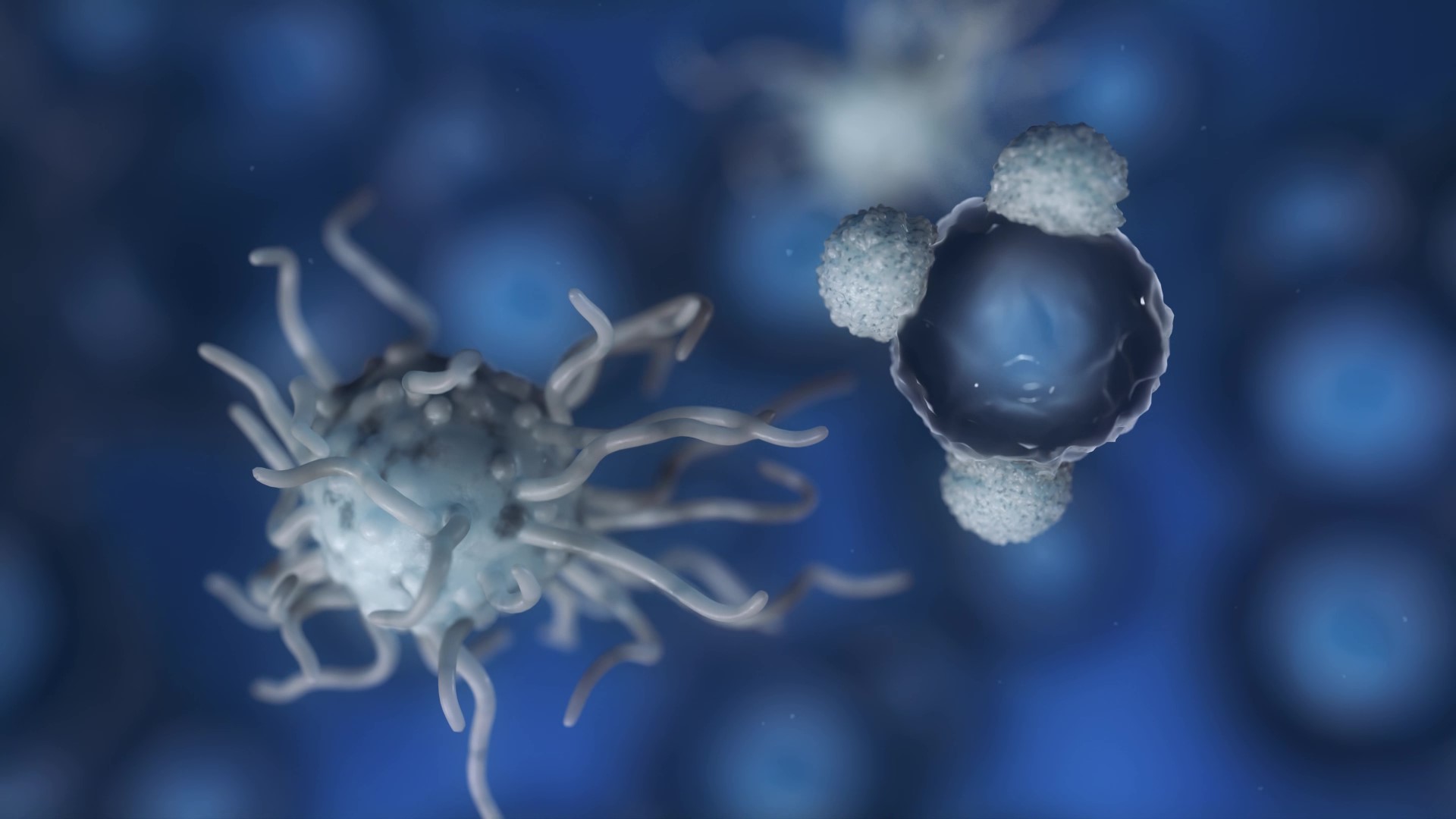
T cells and the Immune System

The immune system is a sophisticated network of cells and molecules that protect the body against infections and other diseases. It consists of two main branches: innate immunity and adaptive immunity.

Innate immunity is the body’s first response to germs and other harmful invaders. It uses physical barriers like the skin and mucous membranes to protect us from disease. If foreign invaders get past these barriers, immune cells like macrophages, neutrophils, and dendritic cells jump into action. These cells can quickly recognize and destroy invading pathogens without needing to have encountered them before.1

Adaptive immunity is a part of the immune system that takes a little longer to start working, but it provides a strong, targeted defense that lasts. It involves B cells and T cells, which can identify specific foreign proteins, called antigens. The unique advantage of adaptive immunity is its ‘memory’ – once it fights off a particular foreign invader or ‘non-self’ cell, it can remember it and react faster if it comes back.1

The immune system's memory and targeted approach make it especially effective at protecting the body over time.


T cells vs. B cells

B cells and T cells play a similar role in fighting off infections and cancer, but they do so in different ways. B cells create antibodies that attach to an invader and either neutralize it or call in other immune cells to kill the infection.3

T cells, on the other hand, are able to attach to an invader directly and either kill it (in the case of cytotoxic ‘killer’ T cells1) or call in other parts of the immune system to do the killing (in the case of ‘helper’ T cells1). The way a T cell recognizes and attaches to a foreign or infected cell is through a special receptor called a T cell receptor (TCR).

T cell receptors in immunotherapy

Affinity_enhanced_TCR.png


On a T cell’s surface are its T cell receptors, which can recognize and attach to specific markers (usually called antigens) found on infected or abnormal cells.2 These antigens provide a ‘window’ into the cell, allowing the T cell to see whether it is healthy or unhealthy.

However, sometimes the immune system does not work as intended, for example when diseased cells manage to evade immune defenses, or when the immune system attacks healthy tissues.

Developments in TCR-based immunotherapy have the potential to provide further options for the treatment of a range of conditions.

In cancer and infectious diseases, TCR-based therapies can be designed to potentially direct the immune system to attack infected or tumor cells. In autoimmune diseases, TCR-based treatments have the potential to downregulate the immune system to switch off T cells that are incorrectly attacking a healthy cell.

1 Marshall JS et al. Allergy Asthma Clin Immunology. 2018;14(Suppl 2):49.
2 Alberts B, et al. New York: Garland Science; 2002. Available at: https://www.ncbi.nlm.nih.gov/books/NBK26926/. Last accessed: August 2026.
3 Carter D. UT MD Anderson; 2021. Available at: https://www.mdanderson.org/cancerwise/t-cells--b-cells-and-the-immune-system.h00-159465579.html. Last accessed: August 2026.


CM-UK--2600004
DOP: August 2026